Launch offer — valid today only

📄 Digital book in PDF · read it on your phone or print it

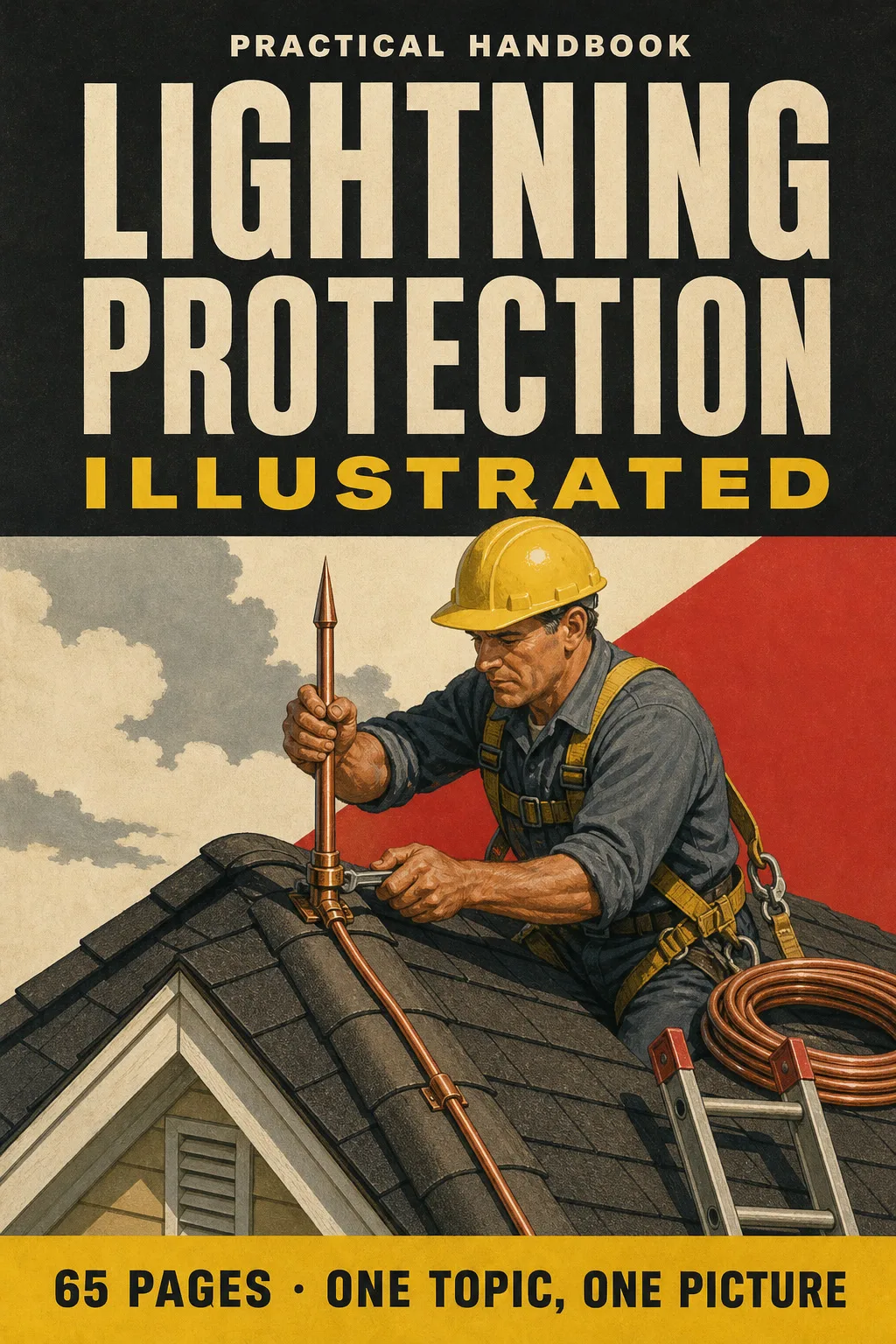
Lightning Protection Installer Exam: NFPA 780 in Drawings From Air Terminal to Ground Rod, Always in the Same Order

Air terminals, conductor bends, down conductors, ground rods, ground rings, the bonding distance, side flash, SPDs and the rolling sphere. Each topic gets its own page: the drawing first, then what you need to remember. 65 illustrated pages.

START STUDYING THIS WAY

🔒 Secure checkout · PDF by email · 30-day guarantee

Every topic, its own pageEach rule drawn on the roof, with the explanation beside it
65 illustrated pages8 parts, from how the system works to the field inspection checklist
Up-to-date sourcesNFPA 780, UL 96A and LPI-175
PDF by emailFormat

Look Inside the Book

Every page has one big drawing and a box with the numbers you need to know:

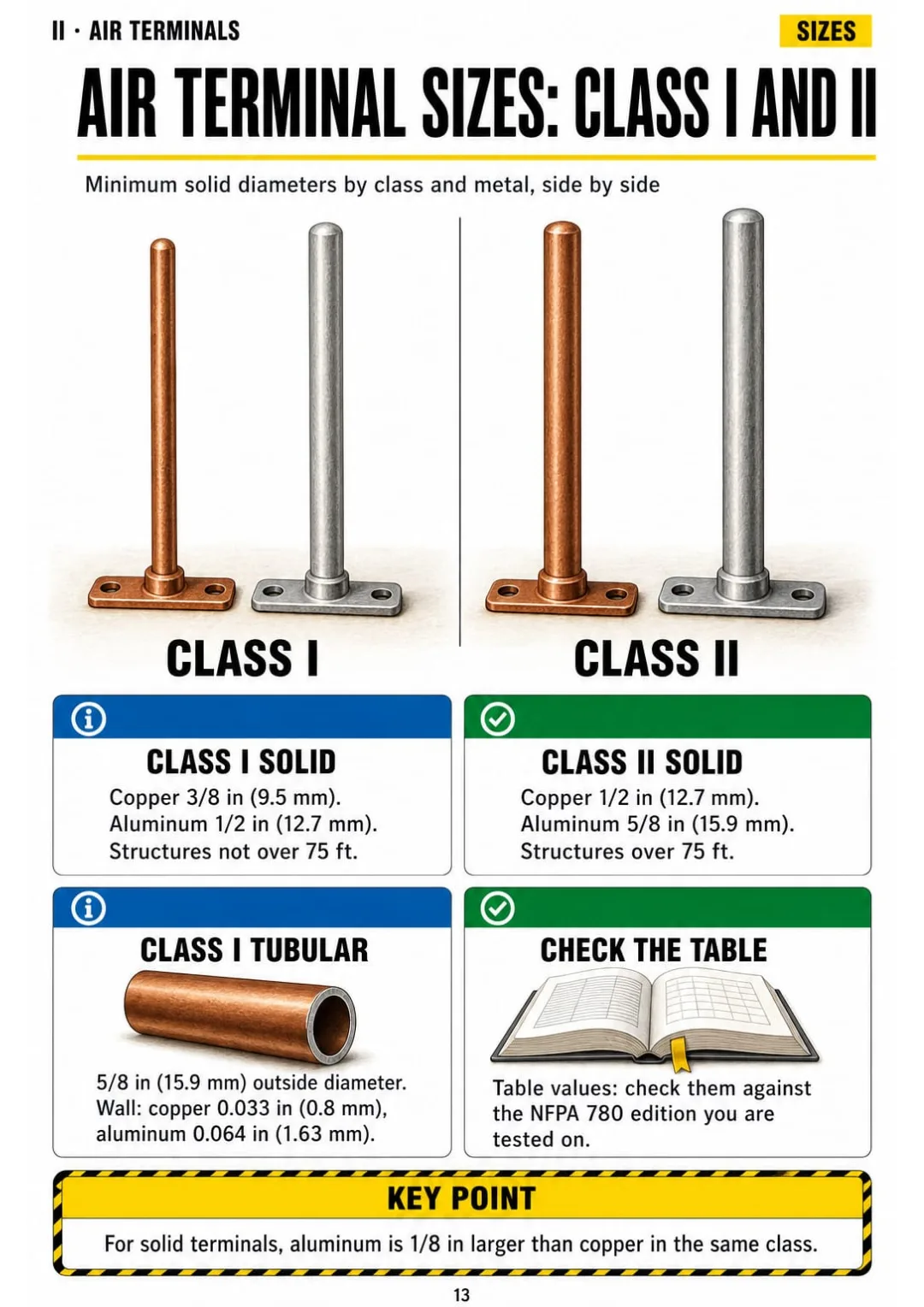
Class I: Cu 3/8 in, Al 1/2 in · Class II: Cu 1/2 in, Al 5/8 in
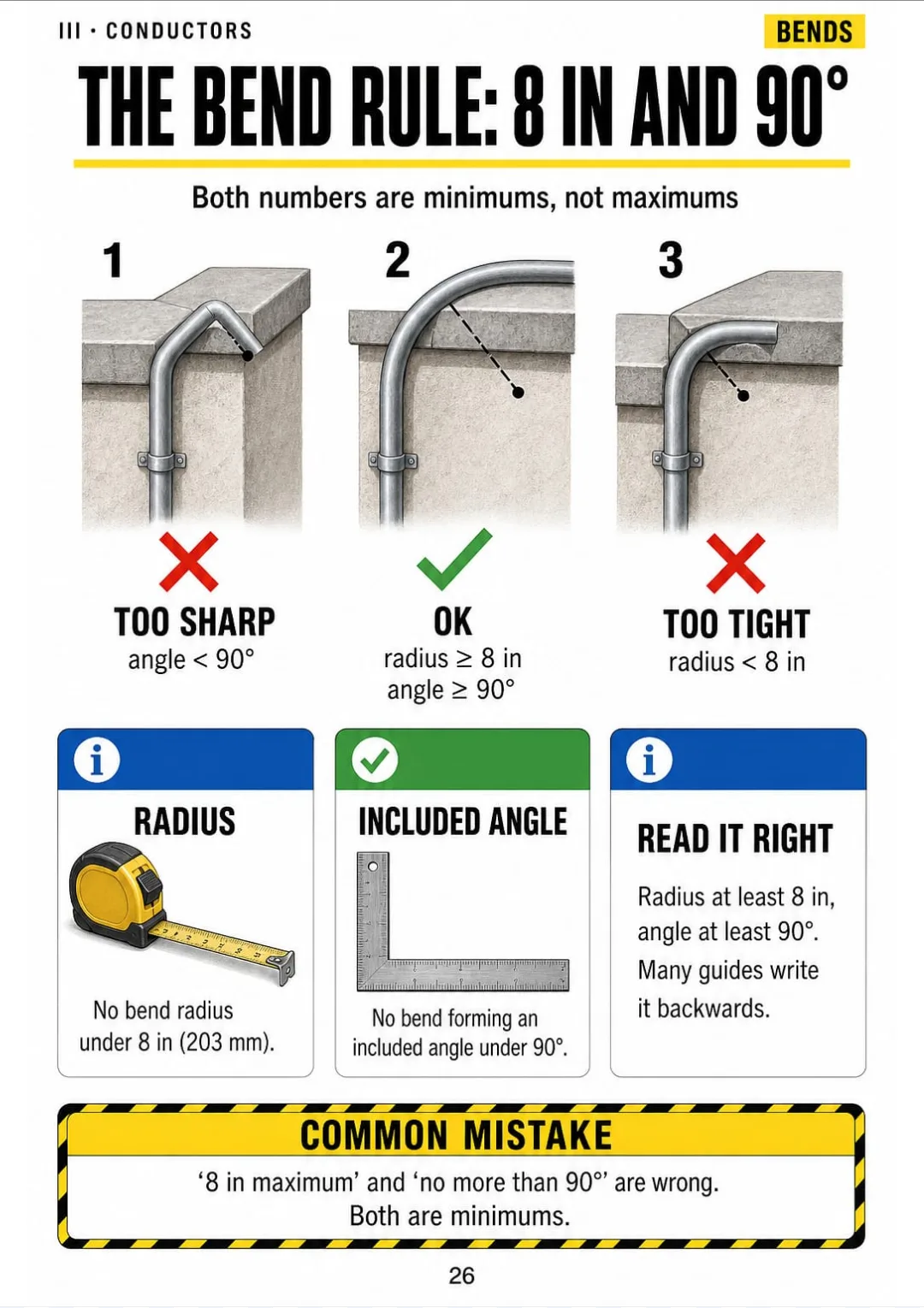
Bends: radius ≥ 8 in (203 mm) · included angle ≥ 90°
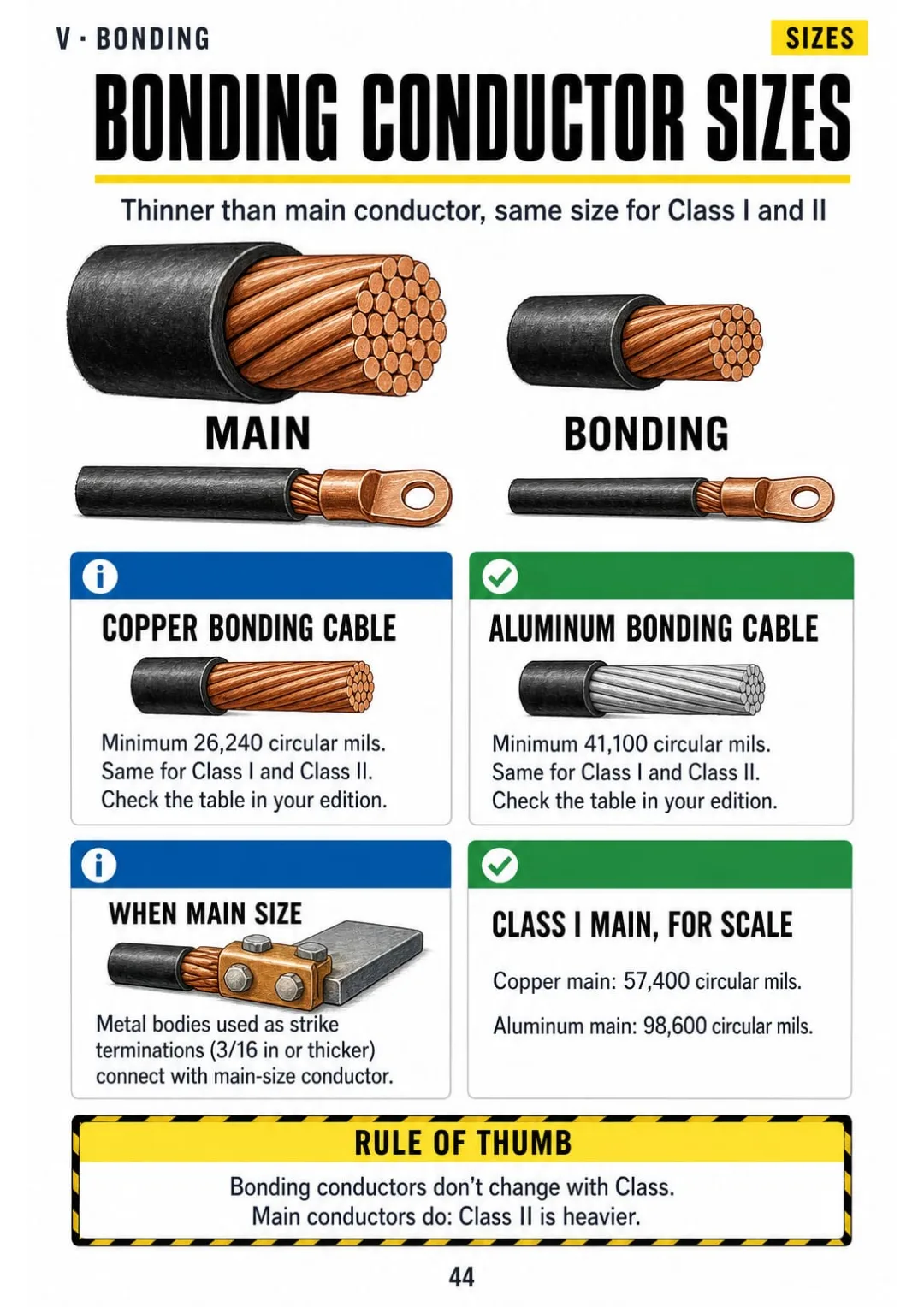
Bonding cable minimum: copper 26,240 cmil, aluminum 41,100 cmil, Class I and II
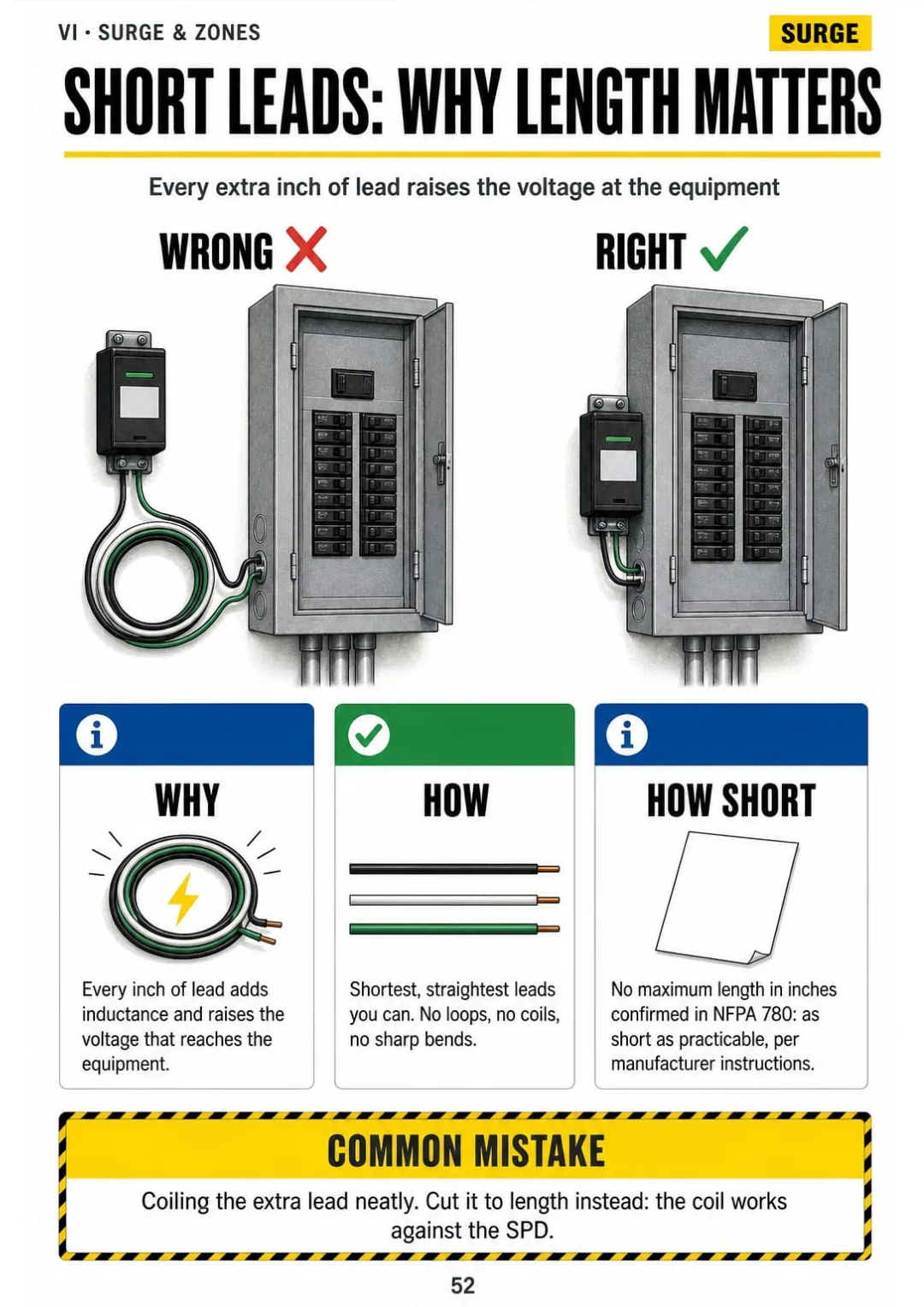
SPD leads: as short and straight as practicable, no loops or sharp bends
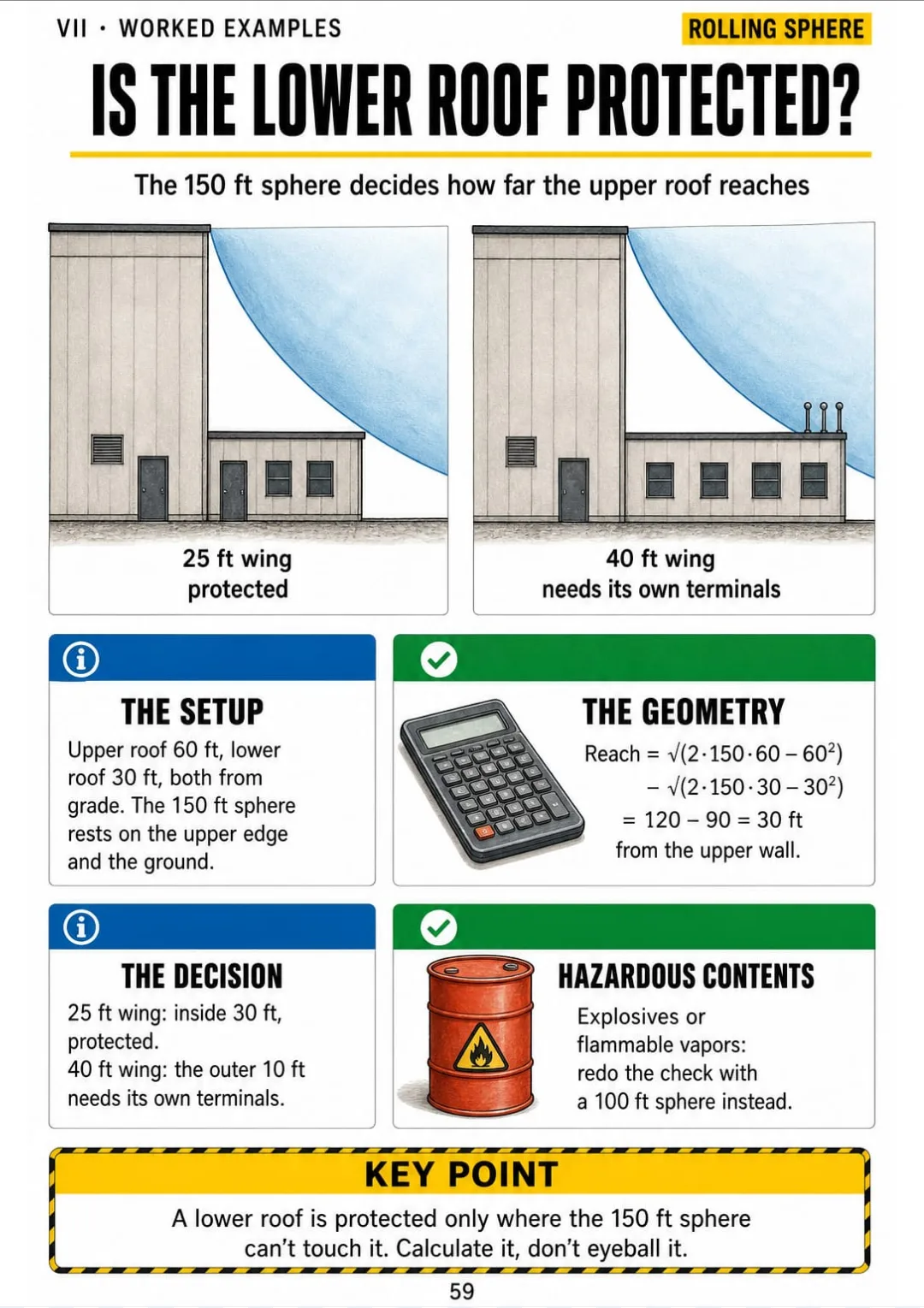
60 ft over 30 ft: the 150 ft sphere protects the lower roof 30 ft out, no further.
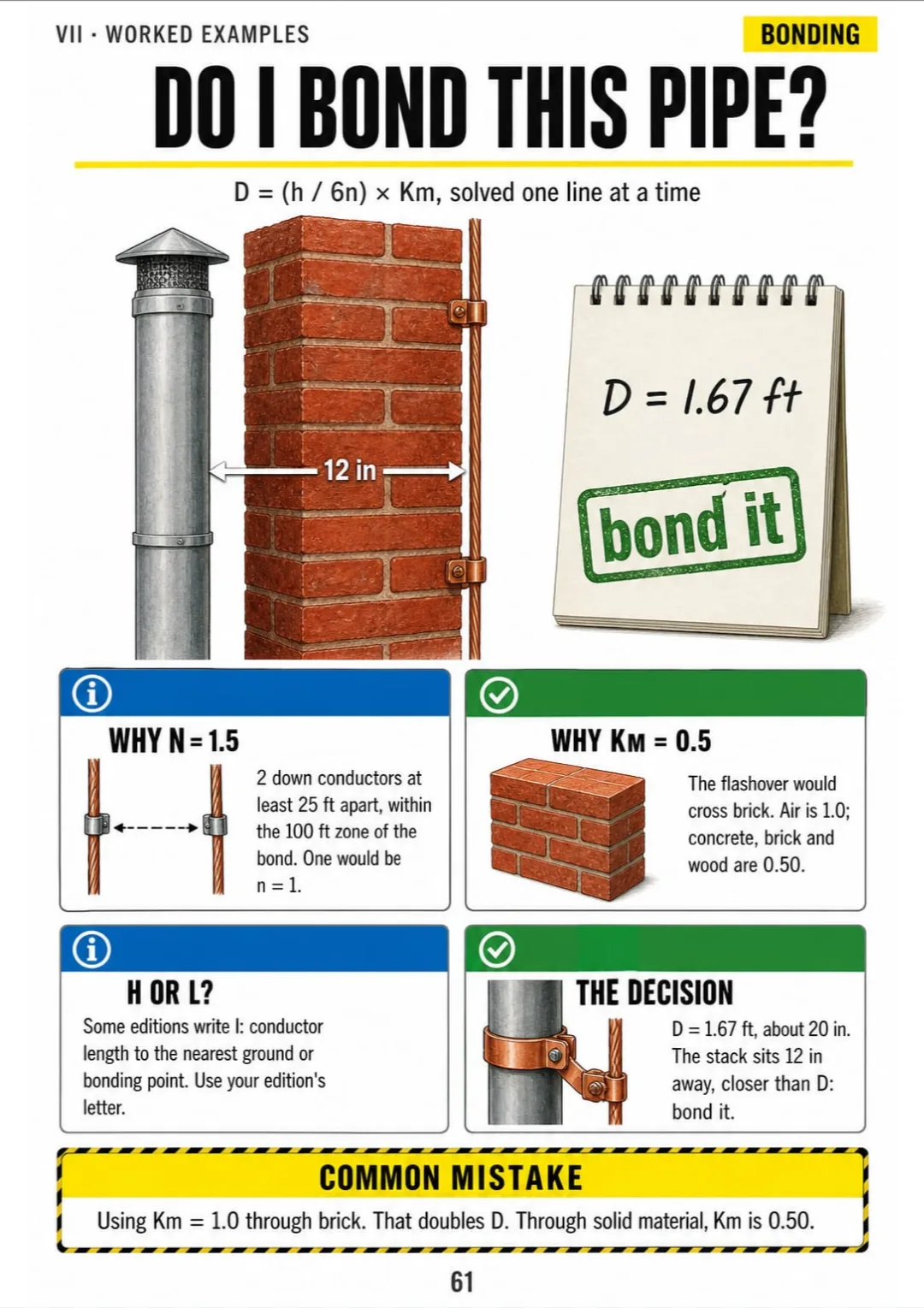
D = (30 / 9) × 0.5 = 1.67 ft: a stack 12 in away gets bonded.
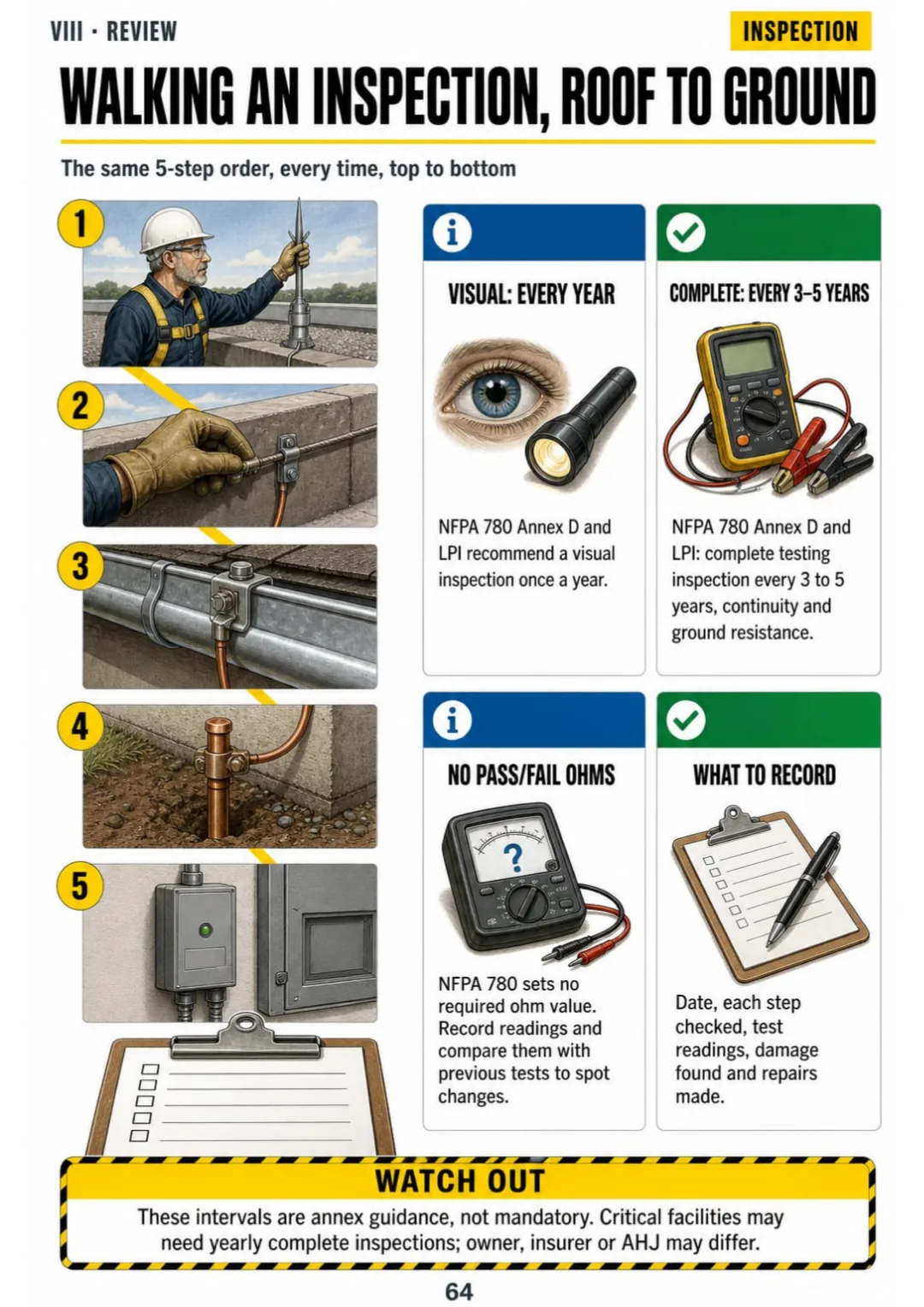
5-step inspection walk: visual every year, complete every 3–5 years (NFPA 780 Annex D)
LPI exams: 5 exams, 3 levels, not open book, 70% to pass

Swipe to see more →

These are real pages from the book. The table of contents is the full one: 8 parts and 61 topics.

The Problem Isn't You. It's How It Was Explained to You.

You're walking a job with the inspector. He stops at a down conductor running a foot from a metal pipe inside the wall. He asks if that pipe needs a bond, and why.

You read about side flash last week. But the standard covers it in paragraphs, a formula and a table of values, and none of it shows you where the arc actually jumps.

Bonding cable minimum: copper 26,240 cmil, aluminum 41,100 cmil, Class I and II

In the book, side flash is one drawing: the down conductor, the wall, the unbonded pipe and the spark jumping between them. The distance that matters is marked right on it.

Same with the bend radius, ground rod depth, air terminal spacing, the rolling sphere and SPDs at the service entrance: each one has its own page.

You see why the bond goes there, and you answer him without going back to the book.

COMPARE FOR YOURSELF

Same Topic, Two Ways to Study It

THIS
  • The standard: line after line
  • Bends and radii explained only in words
  • You show up to the exam still unsure
Conductors are to follow a horizontal or downward path along the roof and walls, avoiding any section that dips and rises again. Bends are to keep a minimum radius and a minimum included angle, as listed for the conductor class, and the same limits extend to bonding conductors, with exceptions for roof and wall penetrations and for fittings listed for that use, subject to the provisions of other sections and to approval by the authority having jurisdiction.
FOR THIS
  • The bend rule in one drawing
  • The 8 in and the 90° in a box
  • You see it and you get it
Bends: radius ≥ 8 in (203 mm) · included angle ≥ 90°
CONTENTS

Take a Look at the 8 Parts and 61 Topics

How the system works, air terminals, conductors, grounding, bonding and side flash, surge protection and zones of protection, worked examples and a field checklist: 65 pages, all illustrated.

IHow the System Works · pp. 5-12
  1. What a Lightning Protection System Actually Does
  2. The 5-Step Order: Terminal, Conductor, Bond, Electrode, SPD
  3. Who Writes the Rules: NFPA 780, UL 96A, LPI-175 and the NEC
  4. Class I or Class II: The 75-Foot Line
  5. Listed Components and What the Label Means
  6. Copper or Aluminum: Where Each One Can't Go
  7. The Two-Way Path: Why Current Needs Two Ways Down
  8. How to Read NFPA 780 Without Getting Lost
IIAir Terminals · pp. 13-22
  1. Air Terminal Sizes: Class I and Class II
  2. The 10-Inch Rule: Minimum Height
  3. Within 2 Feet of Every Ridge End, Corner and Edge
  4. Spacing: 20 Feet or 25 Feet
  5. Tall Terminals: Bracing at Half the Height
  6. Pitched Roofs: Ridge, Hips and Gable Ends
  7. Flat and Gently Sloping Roofs: The 50-Foot Grid
  8. Dormers, Lower Roofs and Additions
  9. Chimneys, Vents and Rooftop Projections
  10. Metal on the Roof: The 3/16-Inch Rule
IIIConductors · pp. 23-33
  1. Main Conductor Sizes: Class I
  2. Main Conductor Sizes: Class II
  3. Horizontal or Downward: Never Climbing
  4. The Bend Rule: 8-Inch Radius, 90-Degree Angle
  5. Fasteners Every 3 Feet
  6. Cross-Run Conductors on Big Flat Roofs
  7. How Many Down Conductors: At Least 2, About 1 Every 100 Feet
  8. Where Down Conductors Go
  9. Guards: The Bottom 6 Feet
  10. Concealed Conductors and Through-Roof Connections
  11. Connectors and Splices That Pass Inspection
IVGrounding · pp. 34-41
  1. The Ground Rod: 1/2 Inch by 8 Feet
  2. How Deep the Electrode Goes
  3. One Electrode for Every Down Conductor
  4. Multiple Rods: Spacing by the Sum of Their Lengths
  5. The Ground Ring: 18 Inches Deep, 2 Feet Out
  6. Shallow Soil, Sand and Rock
  7. Concrete-Encased Electrodes and the Building Steel
  8. Common Grounding: One Earth for Everything
VBonding and Side Flash · pp. 42-49
  1. Why Bonding Matters: Side Flash in One Drawing
  2. NEC 250.106: Tying In to the Electrical Ground
  3. Bonding Conductor Sizes
  4. The Bonding Distance Formula: D = (h / 6n) × Km
  5. The n and Km Values You Have to Know
  6. Gutters, Downspouts and Metal Roofing
  7. Antennas, Masts and Rooftop Equipment
  8. Bonding Inside the Building
VISurge Protection and Zones of Protection · pp. 50-56
  1. SPDs at the Service Entrance: 20 kA
  2. Phone, Cable and Data Lines
  3. Short Leads: Why SPD Wiring Length Matters
  4. The Rolling Sphere: 150 Feet
  5. Protection Angles: 1:2 and 1:1
  6. Masts and Overhead Ground Wires
  7. Trees, Towers and Tall Structures
VIIWorked Examples · pp. 57-61
  1. Example: Air Terminals on a Flat Roof
  2. Example: A Two-Story House With a Gable Roof
  3. Example: Rolling Sphere on a Building With Two Roof Levels
  4. Example: Material Takeoff for a House
  5. Example: Do I Bond This Pipe? Solving the Formula
VIIIReview and Field Checklist · pp. 62-65
  1. The Most Frequent Installation Mistakes
  2. Every Number on One Page
  3. Walking an Inspection From the Roof to the Ground
  4. Studying for the Installer Exam With This Book

One Page, One Topic, All Clear

Think of it this way:

You're on a flat roof, 120 by 80 feet, and you need to know how many air terminals go up before you order material. No time to dig through tables.

In the book you open the flat roof example and see it drawn from above: 20 perimeter terminals at 20 feet, 2 more on the 50-foot grid and the cross-run conductor.

60 ft over 30 ft: the 150 ft sphere protects the lower roof 30 ft out, no further.

Same with the bend rule, the ground rod, the bonding formula, side flash and the rolling sphere: each one on its own page.

Lightning Protection Illustrated is 8 parts and 61 topics, all drawn, with worked examples, every number on one page and a roof-to-ground inspection walk at the end.

What you see drawn, you don't have to memorize.

What's Inside Lightning Protection Illustrated:

Ipp. 5-12

How the System Works

What the system does, the 5-step order (air terminal, conductor, bond, electrode, SPD), who writes the rules, Class I vs. Class II, listed components, copper vs. aluminum and how to find your way in NFPA 780.

IIpp. 13-22

Air Terminals

Air terminal sizes, the 10-inch minimum height, the 2-foot rule at ridge ends and corners, 20 or 25-foot spacing, bracing, pitched and flat roofs, dormers, chimneys and rooftop metal.

IIIpp. 23-33

Conductors

Main conductor sizes for Class I and II, the no-climbing rule, the 8-inch bend radius, fasteners every 3 feet, cross-runs, down conductor count and placement, guards, concealed runs and connectors.

IVpp. 34-41

Grounding

The 1/2 inch by 8-foot ground rod, depth, one electrode per down conductor, multiple rods, the ground ring, shallow soil and rock, concrete-encased electrodes and common grounding.

Vpp. 42-49

Bonding and Side Flash

Side flash in one drawing, NEC 250.106, bonding conductor sizes, the bonding distance formula with its n and Km values, gutters, metal roofing, antennas and bonding inside the building.

VIpp. 50-56

Surge Protection and Zones of Protection

SPDs at the service entrance, phone and data lines, short leads, the 150-foot rolling sphere, protection angles, masts, overhead ground wires, trees and tall structures.

VIIpp. 57-61

Worked Examples

Five solved cases: a flat roof, a two-story gable house, rolling sphere on two roof levels, a material takeoff and the bonding formula on a real pipe.

VIIIpp. 62-65

Review and Field Checklist

The most frequent installation mistakes, every number on one page, an inspection walk from roof to ground and how to study for the installer exam with this book.

At the end of the book: 5 worked examples, every key number on one page and a roof-to-ground inspection walk.
Plus: 2 Free Books

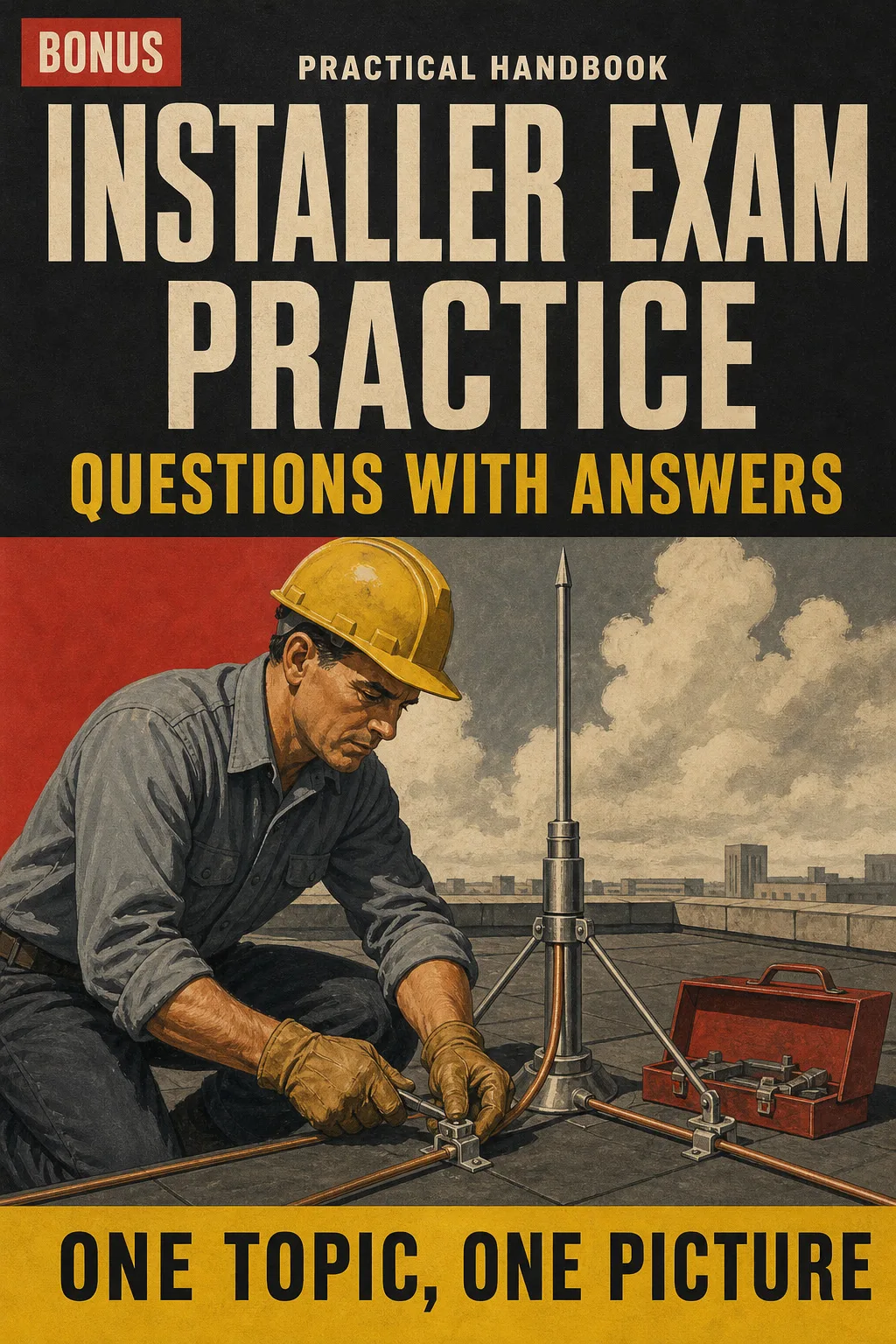
Installer Exam Practice: Questions with Answers

BONUS 1: «Installer Exam Practice: Questions with Answers»

Value on its own: US$ 17.90

Test yourself topic by topic with exam-style questions, and every answer points you back to the page with the drawing.

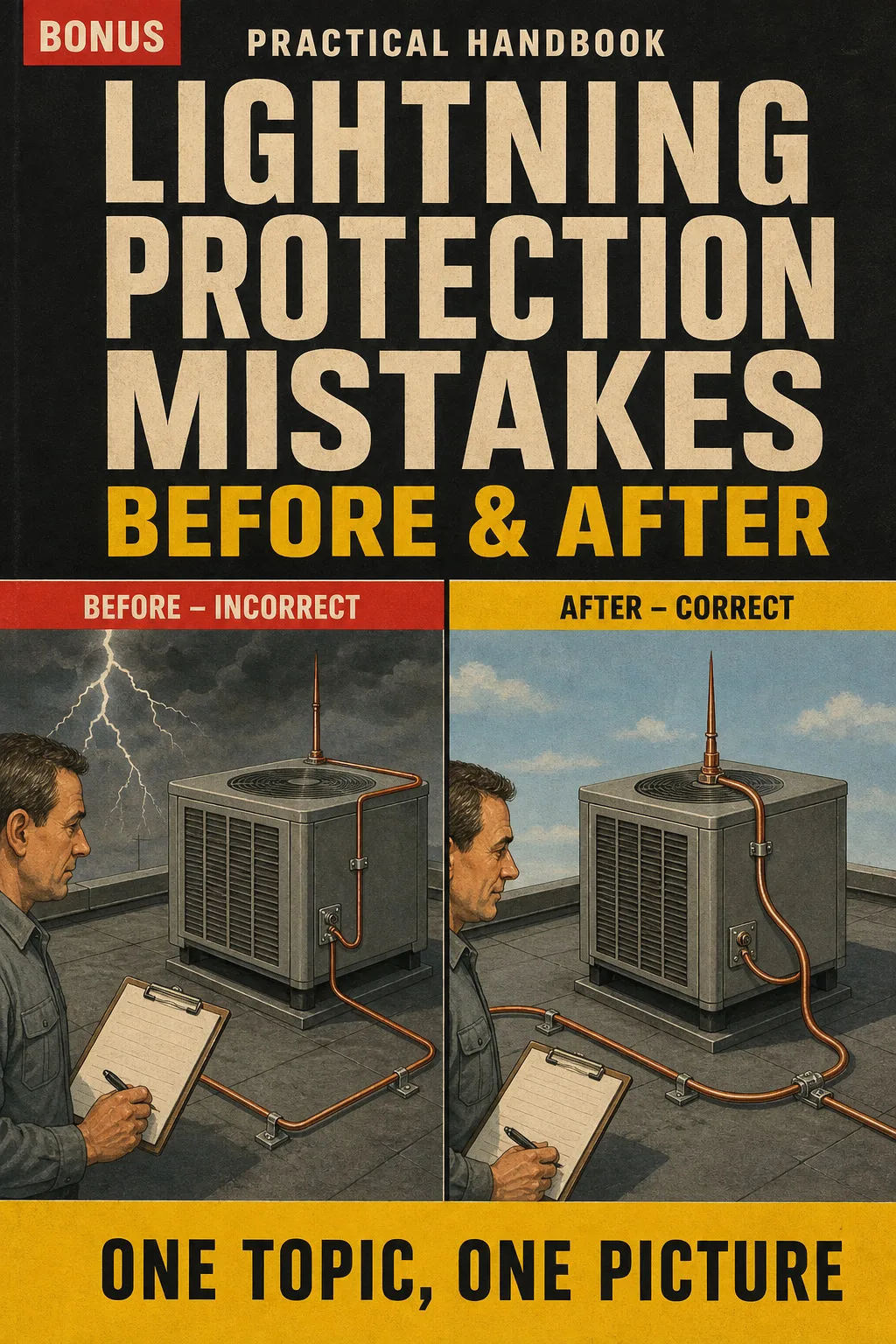
Lightning Protection Mistakes: Before & After

BONUS 2: «Lightning Protection Mistakes: Before & After»

Value on its own: US$ 14.90

See the most common installation mistakes drawn next to the correct way, so you spot them on the roof before the inspector does.

Lightning Protection Illustrated with 2 Free Books

  • Lightning Protection Illustrated: 65 illustrated pagesUS$ 63
  • BONUS 1: Installer Exam Practice: Questions with AnswersUS$ 17.90
  • BONUS 2: Lightning Protection Mistakes: Before & AfterUS$ 14.90
  • High-resolution PDF to printIncluded
Total value US$ 95.80
YOUR PRICE:
US$ 27
You save US$ 68.80
YES, I WANT LIGHTNING PROTECTION ILLUSTRATED FOR US$ 27

📄 This is a digital PDF book sent to your email: nothing is printed or shipped.

Secure purchaseEncrypted payment30-day guarantee

PDF by email: We email you Lightning Protection Illustrated as a PDF, together with the two free books. It's a single payment: no installments, no extra charges.

Who This Book Is For

You're studying for the installer exam

You're studying for the installer exam

You follow the system in the same order every time, terminal to SPD, so each measurement sticks to its place on the roof instead of floating in a table.

Your exam date is close

Your exam date is close

You review one page per topic, check every number on a single drawing and test yourself with the practice bonus, each answer pointing back to its page.

You already work on a crew

You already work on a crew

You print the pages you need and keep them in the truck, so you can answer the inspector or the foreman without guessing.

Everything You Get Today

US$ 95.80US$ 27
YES, I WANT LIGHTNING PROTECTION ILLUSTRATED FOR US$ 27

📄 This is a digital PDF book sent to your email: nothing is printed or shipped.

30DAYS
GUARANTEE

30-Day Guarantee

Try Lightning Protection Illustrated for 30 days, bonus books included.

We refund everything if the file won't open, if the book isn't what you see here, if you were charged twice or if the email doesn't arrive. Just email us.

You pay once. No subscriptions.

Frequently Asked Questions

Is it for me if I already install and I'm preparing for the journeyman or master installer exam?

Yes. It isn't a beginner's book about what lightning is: it takes the system you already know on the roof and puts each rule, measurement and exception on its own drawn page.

Where does the content come from?

It follows NFPA 780 for US lightning protection installers, cross-checked with UL 96A, LPI-175, UL 96, UL 1449 and NEC 250.106. Every measurement and table shows the NFPA 780 section it comes from, so you can check it against the edition your certifying body tests on. Not sure which edition that is? Ask them before you study: it's printed in the exam information.

Is this official material?

No. It's an independent study guide, not affiliated with or endorsed by NFPA, LPI, UL or ANAB. It doesn't give you a certificate or a credential: those come only from passing your certifying body's exam. The book helps you study for it.

Does it replace my course or training?

No. It's a study and review aid. It doesn't replace the official standard, your certification program, OSHA fall protection training or your employer's training.

Are the practice questions the real exam questions?

No. They're written for this book, exam-style, to test yourself topic by topic. They aren't official questions from any exam.

When and how do I get it?

The book and the 2 bonus books arrive as a PDF by email, at the address you enter at checkout.

Do I have to pay every month?

No. It's a one-time payment. No subscription.

Can I have it on paper?

We don't ship a printed book: it's a PDF by email. You can print it, whole or just the pages you want to keep in the truck.

How does the refund work?

You have 30 days. We refund everything if the file won't open, if the book isn't what you see on this page, if you were charged twice or if the email doesn't arrive: just email us.

Before You Close This Page

No more rereading the standard with nothing sticking.

The bend radius and the bonding distance: you see them drawn, and you've got them.

You walk into the exam knowing where every piece goes.

Drawings make studying faster.

The book is right below.

One-time payment: US$ 27 · Guarantee: 30 days · PDF by email

YES, I WANT LIGHTNING PROTECTION ILLUSTRATED FOR US$ 27

📄 This is a digital PDF book sent to your email: nothing is printed or shipped.